








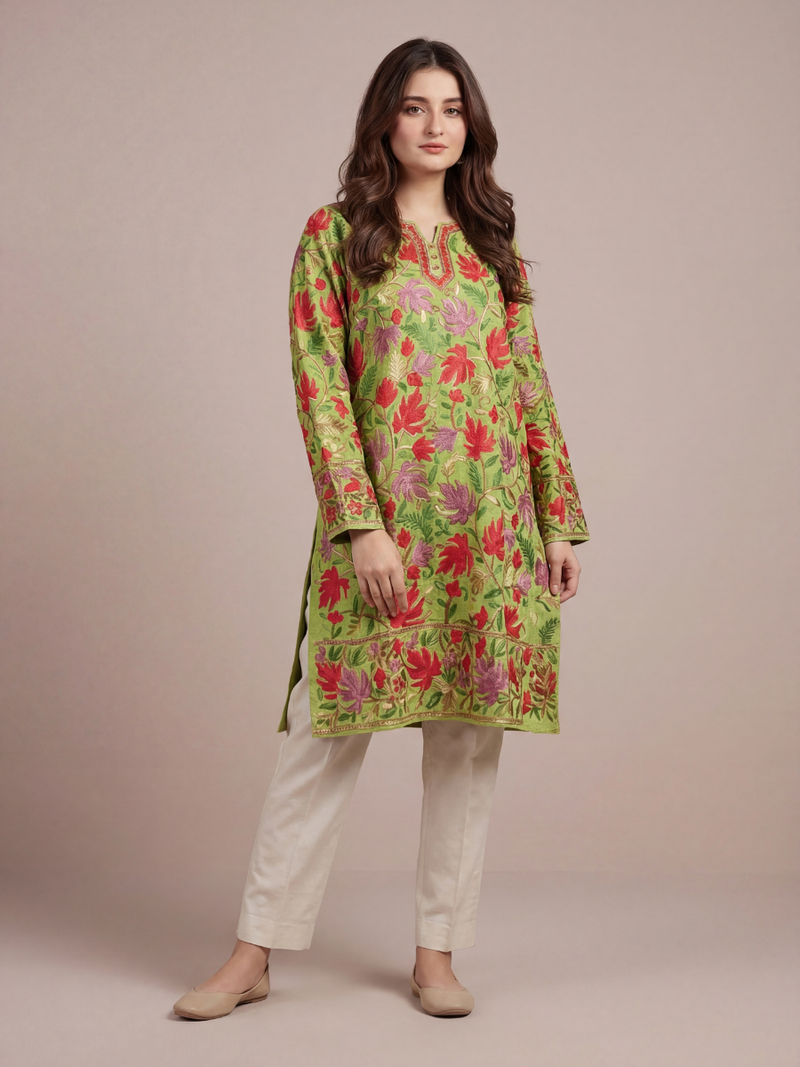

Chinar Embroidery: The Chinar Leaf of Kashmir on Kurtis and Pherans
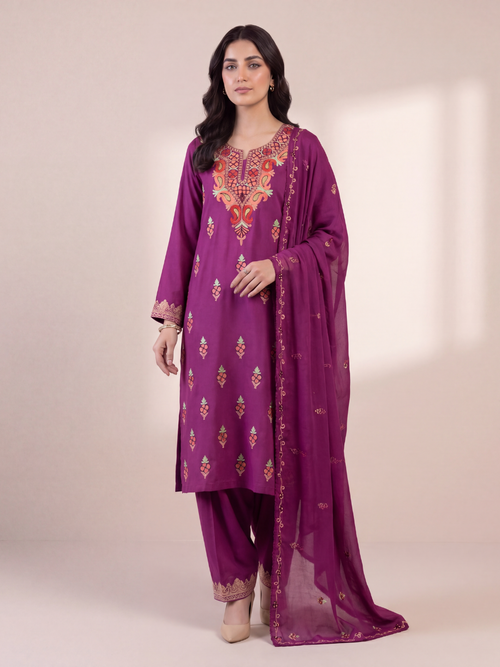
In short: chinar embroidery is the leaf of the chinar tree, Kashmir's great plane tree, worked into cloth, usually in aari chain stitch. The chinar (Platanus orientalis) is the state tree of Jammu and Kashmir, and its broad, hand-shaped leaf, which turns red and gold in autumn, is the best-known motif in Kashmiri craft. At KAARKASH you will find it on our Noor chinar kurtis in cotton for summer and on our chinar pherans for winter.
What the chinar is
The chinar is the oriental plane tree, Platanus orientalis. In Kashmiri it is called būn', also written bouin or booni. It is a large, long-lived tree with a broad, spreading crown and bark that flakes in patches. It can grow to 30 metres or more, and many chinars in Kashmir are hundreds of years old.
Its leaves are broad and deeply lobed, shaped a little like an open hand, much like a maple leaf. In summer they are deep green. In autumn they turn blood red, amber and yellow, and whole gardens in Srinagar seem to catch fire. That autumn colour is why the chinar is the picture most people carry of Kashmir.
The chinar is the state tree of Jammu and Kashmir. Planting it was patronised by the Mughals, and later by the Dogra rulers, so it fills the old gardens of the valley. Naseem Bagh, a Mughal garden near Srinagar with over 700 chinars, has been developed by the University of Kashmir as a Chinar Heritage Park.
Why the chinar leaf is a symbol of Kashmir
Three reasons. It is everywhere: along roads, in gardens and in villages. It is old: a chinar can outlive many generations of one family, so it stands for permanence and home. And it is beautiful in a way that changes with the year, green and shady in summer, red and gold in autumn, bare in the snow.
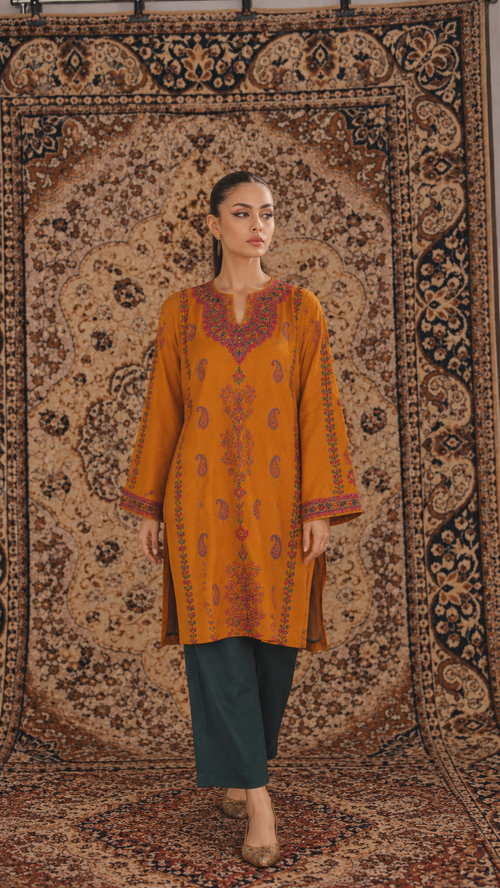
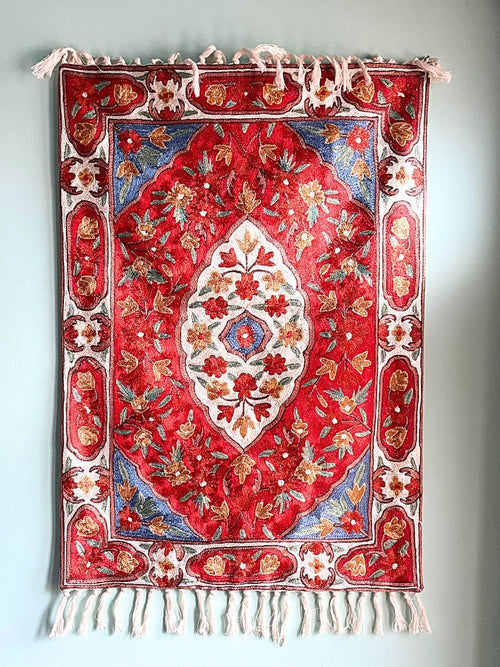
So the leaf became a signature of Kashmiri craft. You will see the chinar motif painted on papier-mâché boxes, woven into carpets, stitched in wool crewel on cushions and curtains, and embroidered on shawls and clothing. When a buyer anywhere sees that hand-shaped leaf on an embroidered piece, they read it as Kashmiri. That is why a chinar leaf design on a kurti or pheran says "Kashmir" more clearly than any label.
How the chinar is embroidered
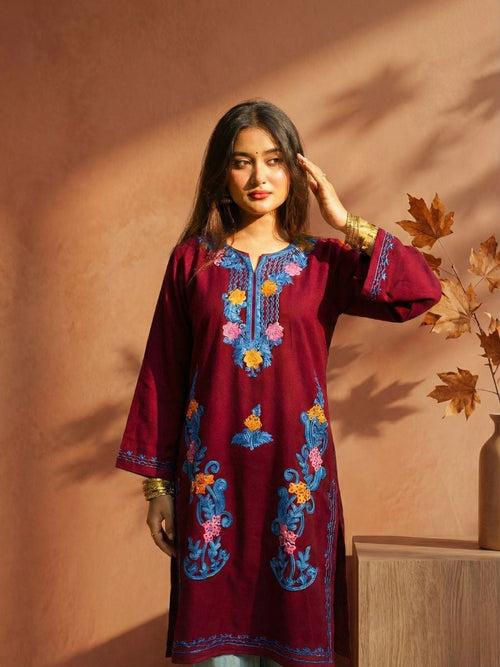
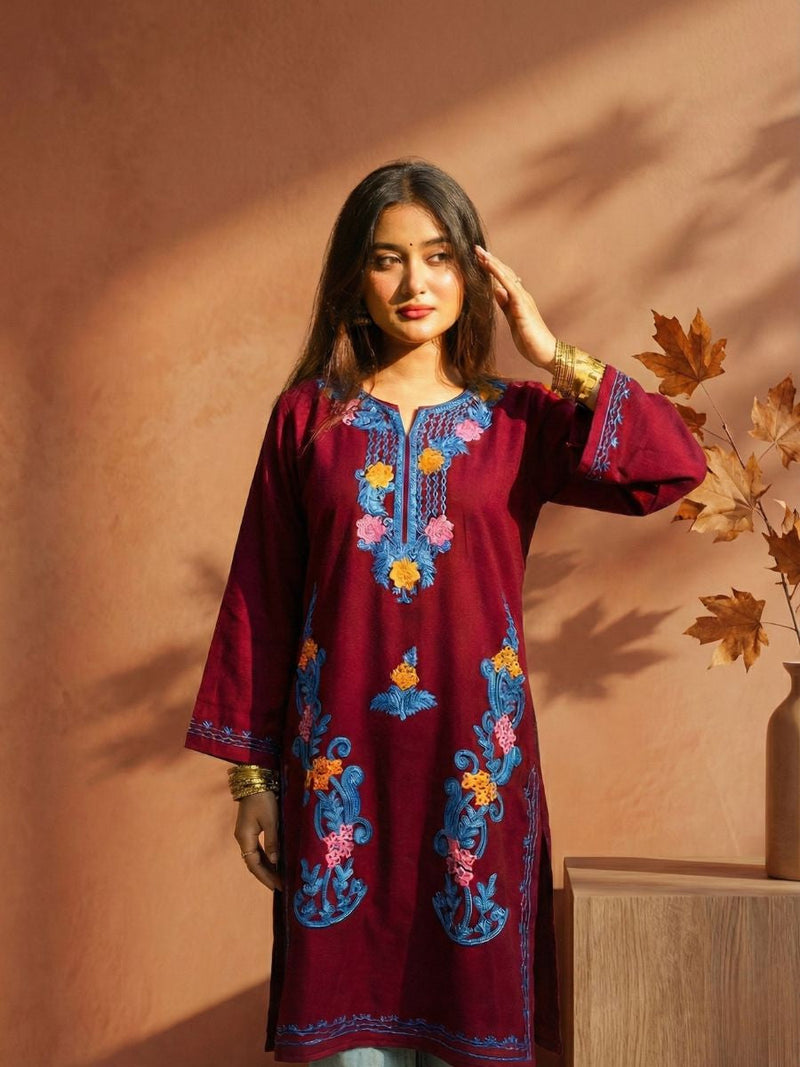
On clothing, the chinar is almost always worked in aari, the Kashmiri chain stitch made with a hooked needle. Aari suits the leaf well. The chain of small loops can follow the long, pointed lobes and the veins in one flowing line, and it can fill the leaf with rows of colour.
- Outline chinar. The leaf drawn in one or two colours, with the veins marked. Light and modern.
- Filled chinar. The leaf filled solid with rows of chain stitch, often in two shades, like a leaf turning colour.
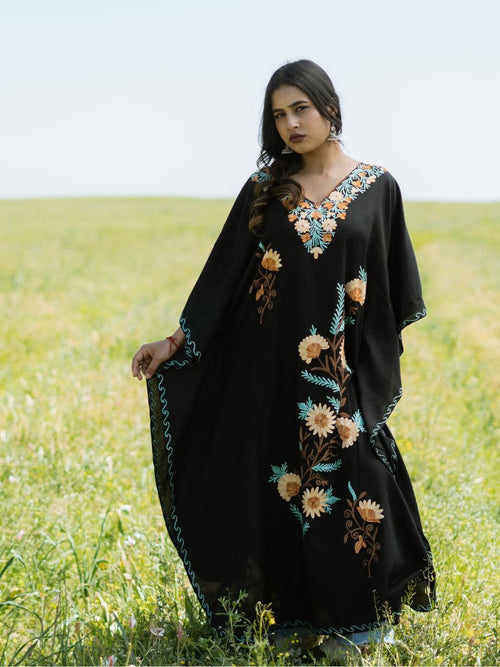
- Chinar with flowers. Leaves mixed with small flowers and creepers along the neck and borders.
- Chinar in zari. The leaf, or parts of it, worked in metallic zari thread for a festive shine, close in look to tilla.
Colours follow the tree. Red, rust, peach and gold read as autumn; greens read as summer. Many pieces use both on one leaf. Our guide to aari, sozni and tilla shows how to tell the stitches apart. On KAARKASH clothing the chinar is hand-assisted manual work: artisans in Kashmir work the embroidery with machine assistance, so thread colours differ a little from piece to piece.
Chinar kurtis for summer: our Noor line
Noor is our summer line, and the Noor chinar kurtis carry the chinar leaf in aari. They are short kurtis in soft Ruby cotton, light enough for a north Indian summer.
- Price. Most cost under ₹1,500. One chinar kurti adds zari to the aari.
- Sizes. Each piece comes in one size, mostly M, written on the product. Check the bust and length on each page.
- One of a kind. Many Noor chinar kurtis are single pieces. When one sells, that colour and thread combination is gone.
See what is in stock in our chinar kurtis, or browse all our Kashmiri kurtis and Kashmiri summer clothing. Our guide to Kashmiri summer clothing compares kurtis, co-ord sets, unstitched suits and kaftans.
Chinar pherans for winter
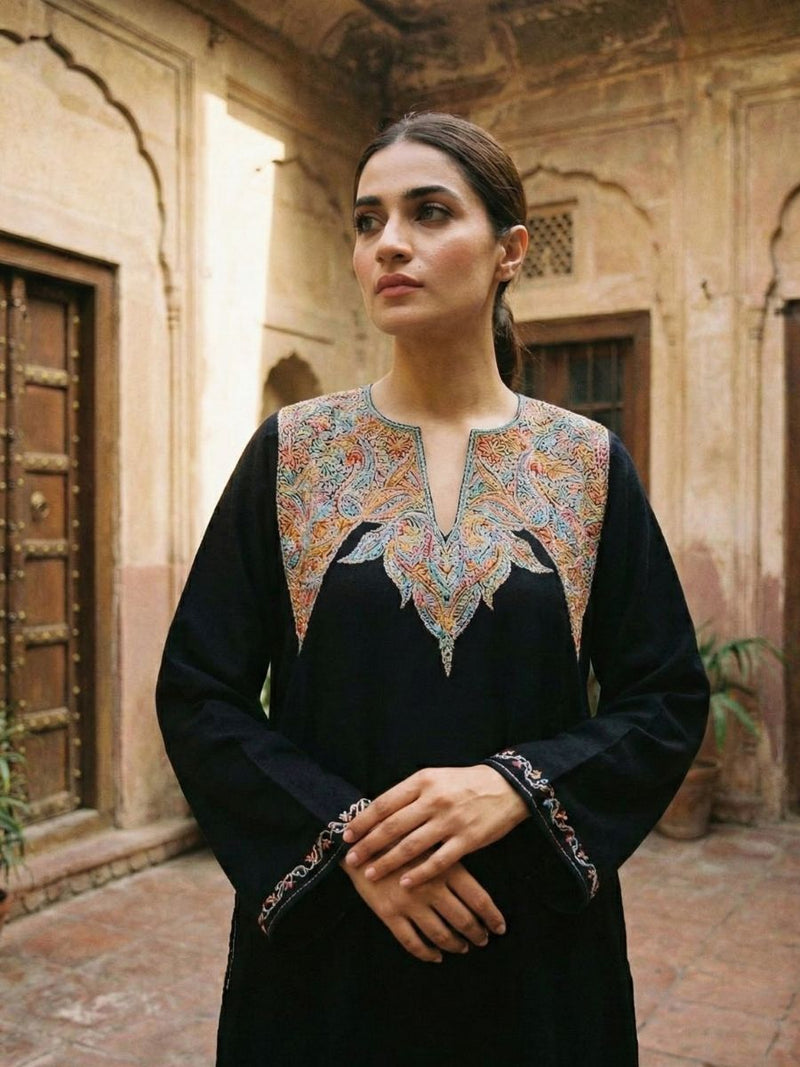
In winter the same leaf moves onto the pheran, the long, loose Kashmiri winter robe. Our chinar pherans carry chinar leaves in aari around the neckline and along the borders, on cashmilon, a soft, warm acrylic made to feel like wool.
- Price. ₹1,499 to ₹2,199 in November 2026. The ₹2,199 pieces are our Manual Aari grade, our finest embroidery.
- Size. One size, L - XXL: mostly 48 to 52 inches at the bust and 42 to 44 inches long, with a pocket on each side. Our pheran size guide shows where the hem falls at your height.
- Colours. Black, bottle green, sea blue, brown and more, with chinar leaves in peach, rust, pink, gold and green.
Some of this winter's Haba Khatoon pherans carry the chinar too. For more choice, see all Kashmiri pherans for women or the Manual Aari collection.
How to wear a chinar kurti or pheran
- Chinar kurti, everyday. Over jeans or straight trousers, with flat sandals. Let the leaf at the neck be the only pattern; keep the bottom plain.
- Chinar kurti, office. Pick a quiet base, beige or brown, with the leaf in a soft colour. Pair with white or cream trousers.
- Chinar kurti, festive. The zari chinar with a plain dupatta and juttis.
- Chinar pheran. Over a thin kurta or fitted top, with a salwar, trousers or jeans, and a shawl when it is cold. Our guide on how to wear a pheran has full outfits.
A small tip: match one colour from the leaf to your trousers or dupatta. A rust chinar with rust-brown trousers looks planned, not busy.
Care
We say dry clean only, for kurtis and pherans. Washing and wringing pull the aari loops out of shape and pucker the cloth around the leaf. Iron on the reverse, never directly on the embroidery. Keep zari away from perfume and sweat, and store pieces folded in a cotton bag, not plastic. Our care guide explains more.
Price and delivery
Most chinar kurtis cost under ₹1,500, and chinar pherans ₹1,499 to ₹2,199. Every piece is made in Kashmir and sent from Srinagar. Delivery is free across India, and cash on delivery is available on most pincodes. Prepaid orders usually arrive in 3 to 5 days; cash on delivery orders take about 8 to 13 days. Returns are only for damaged, defective or wrong items, so read the measurements before you order.
Questions
What is chinar embroidery?
Embroidery of the chinar leaf, the broad, lobed leaf of Kashmir's plane tree, usually worked in aari chain stitch on kurtis, pherans and shawls. It is the best-known motif in Kashmiri craft. In Hindi and Urdu it is the chinar patta, the chinar leaf.
Why is the chinar leaf a symbol of Kashmir?
The chinar is the state tree of Jammu and Kashmir. It grows across the valley, lives for hundreds of years and turns red and gold in autumn, so it has become the picture of Kashmir in its art and crafts.
What is the scientific name of the chinar tree?
Platanus orientalis, the oriental plane. In Kashmiri it is called būn', also written bouin or booni.
Where can I buy a chinar kurti?
KAARKASH sells chinar kurtis made in Kashmir and sent from Srinagar, most under ₹1,500, with free delivery across India and cash on delivery on most pincodes. See our chinar kurtis collection.
Is a chinar kurti good for summer?
Yes. Our Noor chinar kurtis are Ruby cotton, which is light and breathes. The embroidery is placed on the kurti, not all over it, so it stays light.
What is the difference between a chinar kurti and a chinar pheran?
A chinar kurti is a short cotton top for summer. A chinar pheran is a long, loose winter robe in warm cashmilon, worn over other clothes. Both carry the chinar leaf in aari.
Are KAARKASH chinar pieces handmade?
No. The embroidery is hand-assisted manual work, made in Kashmir. Small differences in thread colour from one piece to the next are normal.
Sources
- Platanus orientalis, Wikipedia: Kashmiri name, size, autumn colour, state tree status, Mughal and Dogra planting, Naseem Bagh.
- Aadhaar for Chinar Trees, Drishti IAS, 29 January 2025: state tree of J&K, place in papier-mâché and carpets.
- KAARKASH product fabrics, measurements and prices, November 2026.
Quoting this guide? You are welcome to: please link to it as "Chinar Embroidery: The Chinar Leaf of Kashmir on Kurtis and Pherans", KAARKASH.
Written by the KAARKASH team in Srinagar, Kashmir, where our pieces are made and packed. Updated November 2026.