










Aari vs Sozni vs Tilla: Kashmiri Embroidery Explained
In short: aari is Kashmiri chain-stitch embroidery, named after the aar, a hooked needle, in bold floral lines. Sozni is fine, flat embroidery in small, close motifs, the work seen on pashmina shawls. Tilla is gold or silver metallic-thread embroidery, the most festive of the three. On KAARKASH clothing all three are hand-assisted manual work, made in Kashmir.
Aari
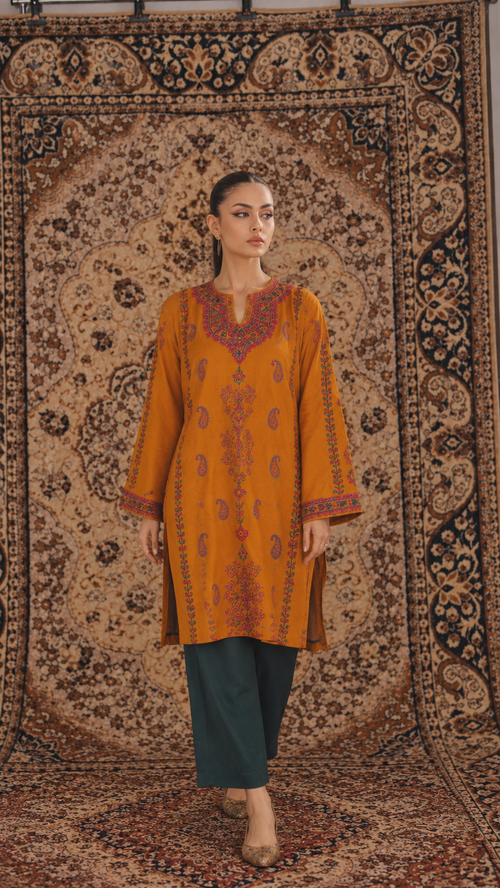
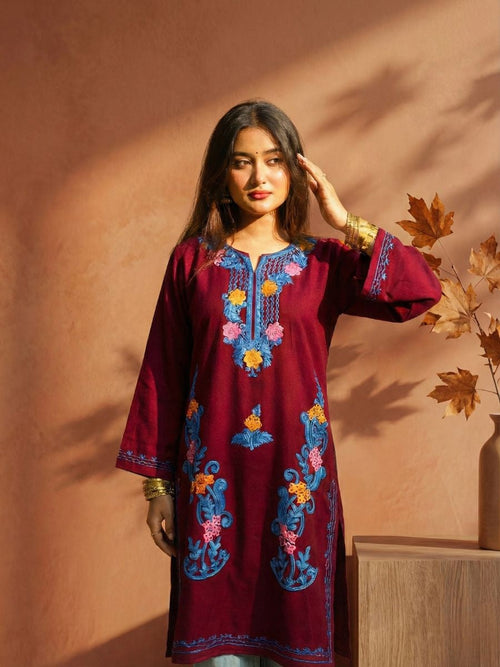
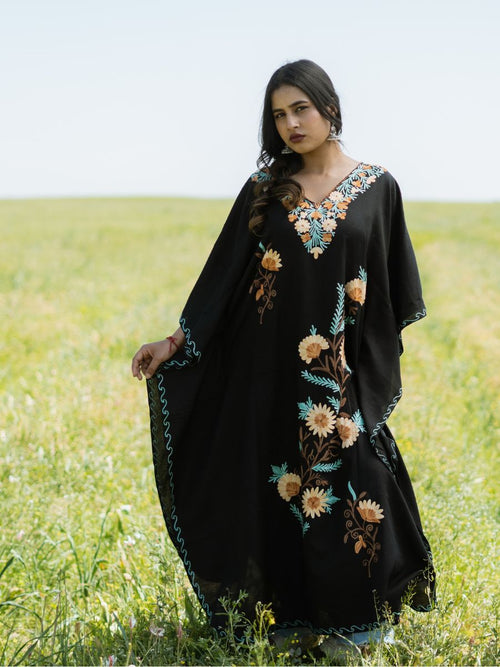
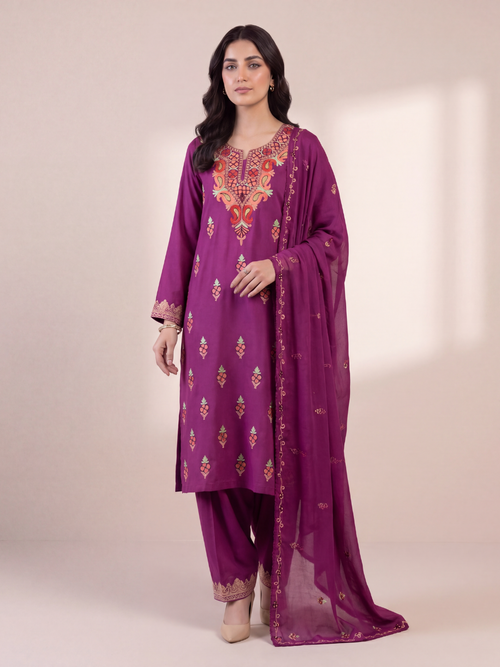
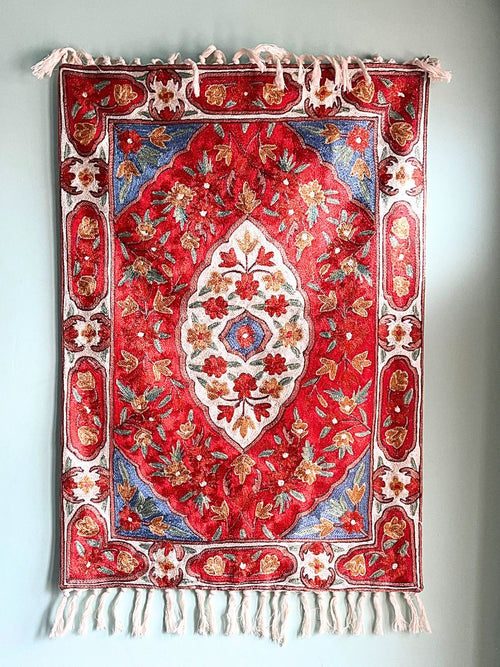
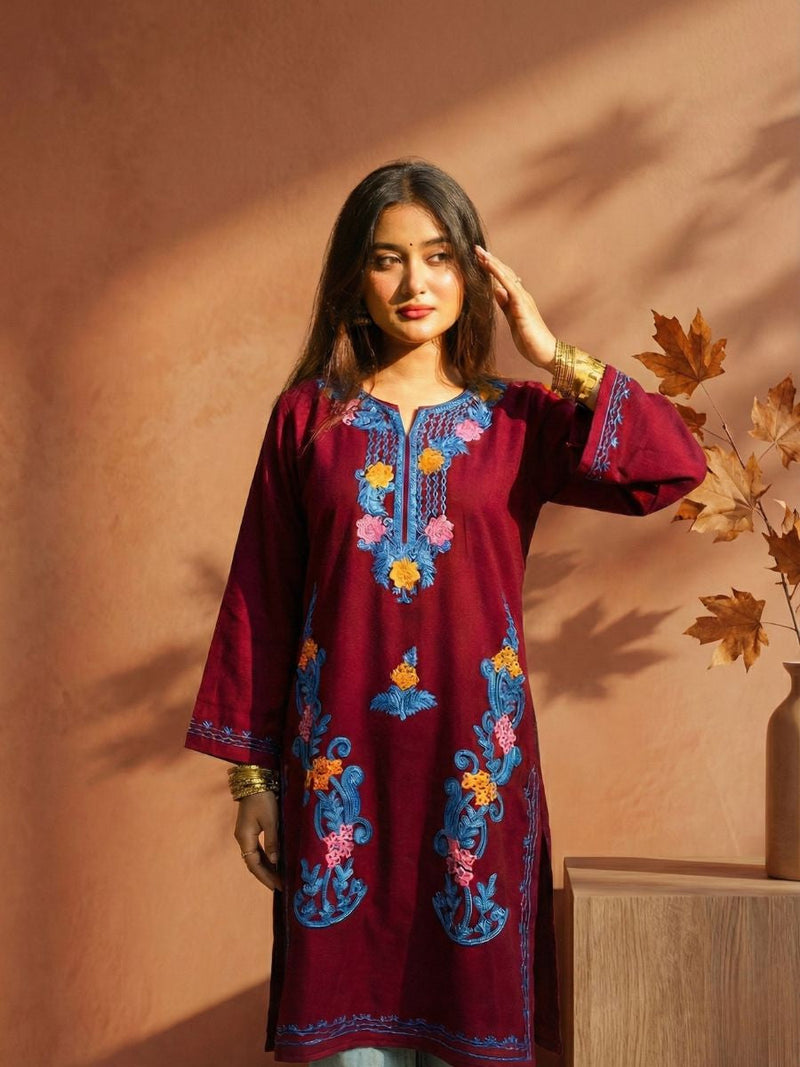
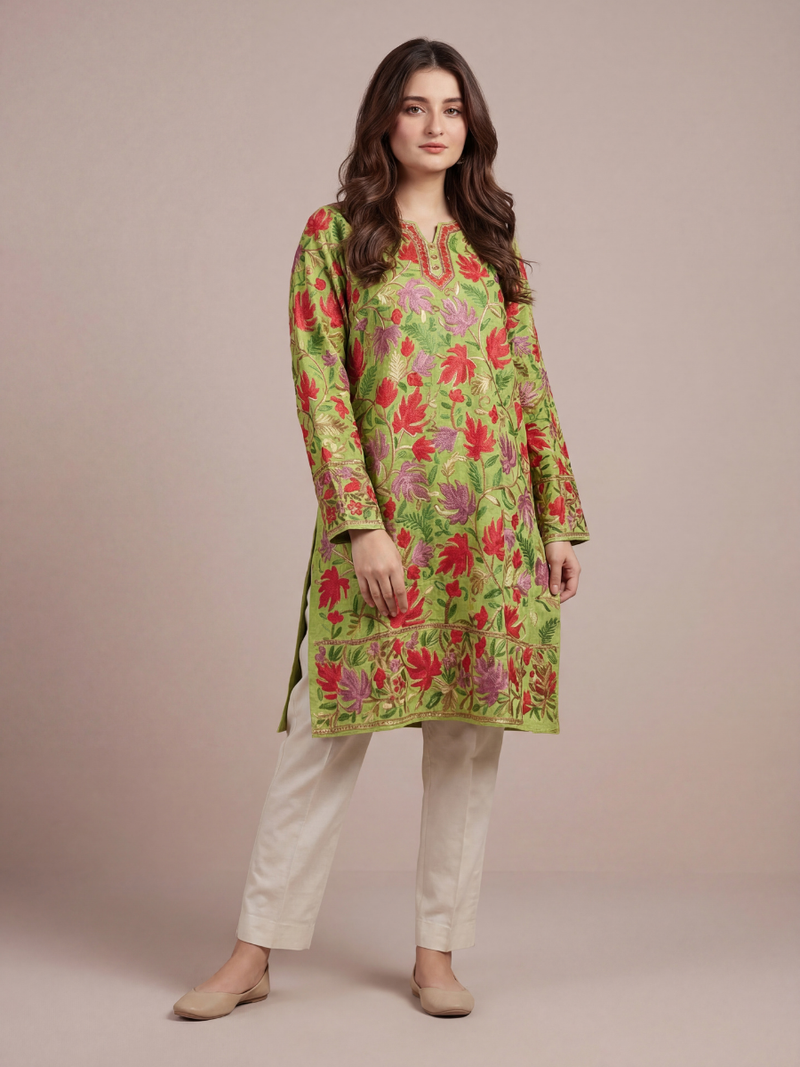
Aari takes its name from the aar, a hooked needle. The stitch is a chain of small loops that draws long, flowing lines, which is why aari suits big floral designs: chinar leaves, paisley (badam), flowers (gul) and small scattered motifs (boti). On a pheran it runs along the neck, the cuffs and the borders; on a kurti or a co-ord set, the neck and the sides. Aari stands slightly off the cloth, so you can feel it under your finger. It is usually the most affordable of the three, though on our pherans the fabric sets the price more than the stitch, and it is the one you will see most in our pherans, kurtis and co-ord sets. Our finest aari grade, with fuller and closer motifs, has its own page: manual aari work.
Sozni
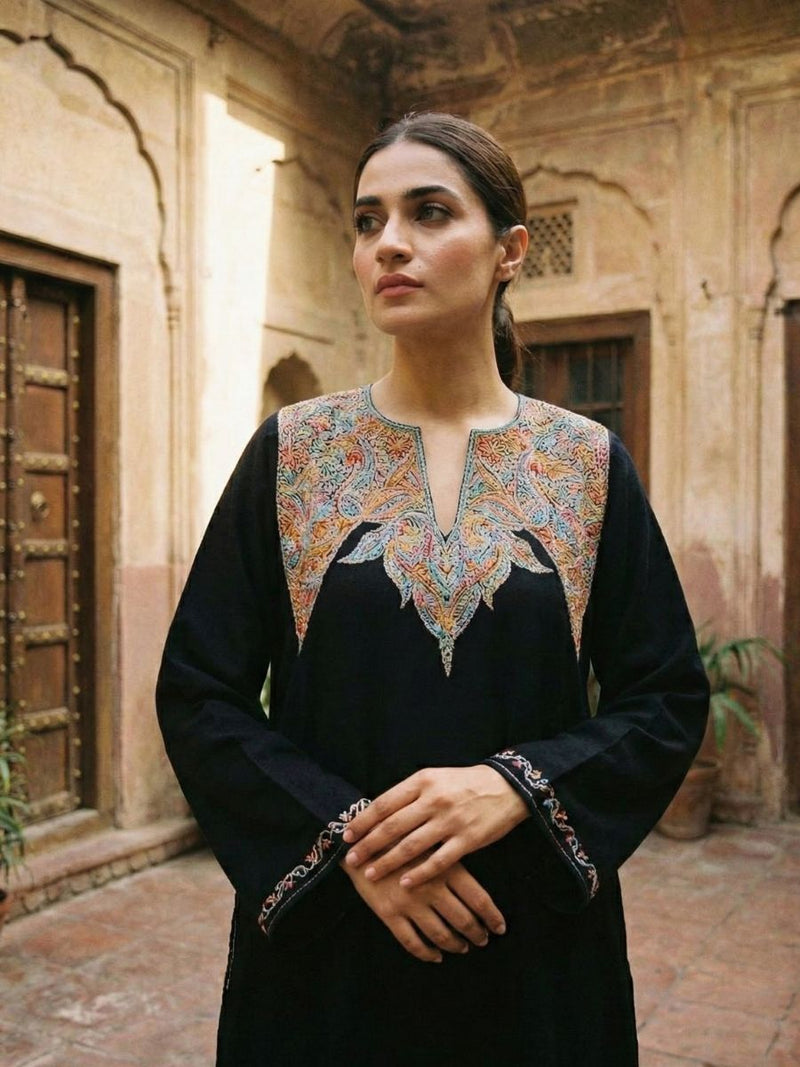
Sozni is fine, flat embroidery. The stitches are tiny, packed so close that from a step away the motif looks drawn, not stitched. Classic sozni is worked in small paisleys and borders, often in two or three quiet colours. It is the embroidery of the Kashmiri pashmina shawl, where a single shawl can take months. On clothing it reads as elegant rather than showy, which makes a sozni pheran the right one for the office or an evening out. Our tusha shawls and our sozni pherans carry it.
Tilla
Tilla is embroidery in metallic thread, gold or silver in colour, so the motif shines. Boti tilla is small scattered motifs; gul tilla is flowers; a tilla border runs along the neck and the cuffs. It is the embroidery of weddings, Eid and the festive season, and in Kashmir a tilla pheran is often the bridal one; small boti tilla motifs suit everyday pieces too. Tilla needs a little care: keep it dry, keep perfume off it, and store it in cotton. Our Kongposh pherans in raffal wool carry boti tilla, and our boti tilla unstitched suits and summer co-ord sets carry small scattered tilla motifs.
Side by side
| Aari | Sozni | Tilla | |
|---|---|---|---|
| Thread | Cotton or silk | Fine thread | Metallic, gold or silver |
| Look | Raised chain-stitch lines, bold florals | Flat, tiny, dense motifs | Shining gold or silver motifs |
| Feel | Slightly raised | Smooth, flat | A little stiff where worked |
| Best for | Every day: kurtis, co-ords, pherans | Office, evenings, shawls | Weddings, Eid, festive wear |
| Care | Dry clean | Dry clean | Dry clean, keep dry, store in cotton |
How to tell them apart in a photo
Look at one motif up close. If you can see small loops joined in a chain, it is aari. If the stitches are too small to pick out and the motif lies flat on the cloth, it is sozni. If it shines, it is tilla. Many pieces mix them: an aari pheran with a tilla neckline is common.
Words you will see on our pages
- Chinar: the leaf of the chinar tree, the emblem of Kashmir.
- Badam: the paisley, named for the almond.
- Gul: flower. Posh also means flower, as in Gulposh and Poshmal.
- Boti: small scattered motifs.
- Jaal: an all-over net of motifs.
- Crewel: wool chain stitch on thick cloth, used for our cushion covers and home décor, which are handmade.
Questions
Is your embroidery handmade?
On our clothing, aari, sozni and tilla are hand-assisted manual work, made in Kashmir; the exception is our Meeras pherans, whose sozni is hand-embroidered with a needle. Our papier-mâché, carpets, crewel home décor and bags are handmade.
Which is the most expensive?
Traditionally sozni on a pashmina shawl, because of the months it takes. On our pherans the price follows the fabric and how much of the piece is covered more than the stitch. Our pheran price guide lists each line.
Does tilla tarnish?
Modern tilla thread keeps its shine if it stays dry and away from perfume and sweat. Dry clean it, and store the piece in a cotton bag, never plastic.
Can I wash aari or sozni embroidery at home?
We say dry clean only. Machine washing and wringing pull the loops and pucker the cloth. Our care guide explains.
Is aari the same as crewel?
Both are chain stitch. Crewel uses wool on thick cloth for curtains, cushions and rugs. Aari uses cotton or silk thread on clothing.
Written by the KAARKASH team in Srinagar, Kashmir, where our pieces are made and packed. Updated October 2026.